
Beyond Gut Feel: Key HR Analytics & KPIs for Malaysian Businesses
“Our turnover seems high lately.” “I think morale is low in the marketing department.” For years, many critical people-decisions have been based on observations, assumptions, and gut feelings. While experience is valuable, this approach leaves too much to chance in today’s competitive business landscape.
It’s time to make the shift from subjective feelings to objective, data-driven strategy. This is the power of HR analytics. This guide will define what HR analytics truly means, break down the most crucial Key Performance Indicators (KPIs) for Malaysian businesses, and show you how to start tracking them today to make smarter, faster decisions.
What is HR Analytics? (And Why It’s More Than Just Reporting)
Many people confuse HR analytics with standard HR reporting, but they are fundamentally different. Understanding this distinction is the first step toward unlocking the strategic value of your people data.
From Reporting to Analytics
Reporting tells you what happened. It is the process of presenting historical data in a structured format. For example:
- “Our employee turnover rate was 15% last year.”
- “We hired 50 new employees in Q3.”
Analytics tells you why it happened and what’s next. It involves interpreting that data to uncover trends, patterns, and insights that can predict future outcomes and guide your strategy. For example:
- “Our turnover was 15% because it was concentrated in the sales department among employees with less than two years’ tenure. If this trend continues, we predict a 20% turnover next year. To fix this, we need to improve our sales onboarding program.”
The Strategic Value for Your Business
Embracing HR analytics allows your business to:
- Make Confident Decisions: Replace guesswork with evidence-based insights when planning budgets, launching new initiatives, or changing policies.
- Increase HR’s ROI: Prove the financial impact of your HR functions by connecting metrics like quality of hire to revenue and productivity.
- Solve Problems Proactively: Identify potential issues, such as employee flight risks or departmental burnout, before they escalate into major problems.
The Essential HR KPIs Every Malaysian Business Should Track
Getting started with HR analytics means focusing on the metrics that provide the most value. Here is a practical checklist of the most impactful KPIs, grouped by HR function.
1. Talent Acquisition KPIs: Measuring Your Hiring Success
*Time to Hire: The average number of days between a job being posted and a candidate accepting the offer. A long Time to Hire can mean losing top talent to competitors.
- Cost per Hire: The total internal and external costs of recruitment divided by the number of hires. This metric is essential for effective HR budget management.
- Quality of Hire: Assesses the value a new hire brings to the company, often measured by their performance review scores after their first year. This is the ultimate indicator of a successful recruitment process.
- Offer Acceptance Rate: The percentage of candidates who accept a formal job offer. A low rate may signal that your compensation packages are not competitive.
2. Retention & Engagement KPIs: Understanding Your Workforce Stability
*Employee Turnover Rate: The percentage of employees who leave the company within a set period. This is the most crucial retention KPI and should be analyzed by type (voluntary vs. involuntary), department, and manager.
- New Hire Turnover Rate (First-Year): A high turnover rate within the first year points directly to issues in your employee onboarding process or a mismatch in hiring.
- Employee Net Promoter Score (eNPS): Measures employee loyalty by asking a simple question: “On a scale of 0-10, how likely are you to recommend our company as a place to work?”
- Absenteeism Rate: Tracks the rate of unscheduled absences. A rising rate is often an early warning sign of employee burnout or disengagement.
3. Performance & Productivity KPIs: Gauging Workforce Effectiveness
*Goal Completion Rate: The percentage of employees who are meeting their individual performance goals. This helps evaluate the effectiveness of your performance management systems.
- Revenue per Employee: A high-level metric (Total Revenue / Total Number of Employees) that connects your workforce’s productivity directly to the company’s financial health.
- Performance vs. Potential (9-Box Grid): This is a valuable framework for talent mapping. It helps you identify future leaders and employees who may need additional development.
4. Compensation & Benefits KPIs: Assessing Your Reward Strategy
*Compensation Competitiveness Ratio (Compa-Ratio): This ratio (Employee’s Salary / Market Midpoint Salary) shows how your employees’ pay stacks up against the market average, ensuring you remain competitive.
- Benefits Participation Rate: Tracks the percentage of employees enrolled in various benefits programs. Low participation in a specific benefit may mean it isn’t valued by your team, allowing you to reallocate resources more effectively.
The Challenge: Turning Raw Data into Actionable Insights
The theory sounds great, but for most businesses, there’s a huge practical problem. HR data is scattered everywhere: in payroll systems, leave management spreadsheets, performance review documents, and recruitment logs.
Trying to manually collect, clean, and connect this data is a nightmare. It is incredibly time-consuming, requires specialized skills, and is highly prone to errors. This is the single biggest barrier that stops businesses from leveraging the power of their own people data.
Your Solution: The Worksy HR Analytics Dashboard
This is where an all-in-one platform like Worksy HRMS becomes a game-changer. It is designed to make sophisticated HR analytics simple, visual, and accessible to any business, without needing a team of data scientists.
Centralized Data Source
Because all your HR functions: from onboarding and leave to payroll and performance, are managed within one integrated system, Worksy creates a single source of truth. All your data is automatically connected and consistent.
Real-Time Visual Dashboards
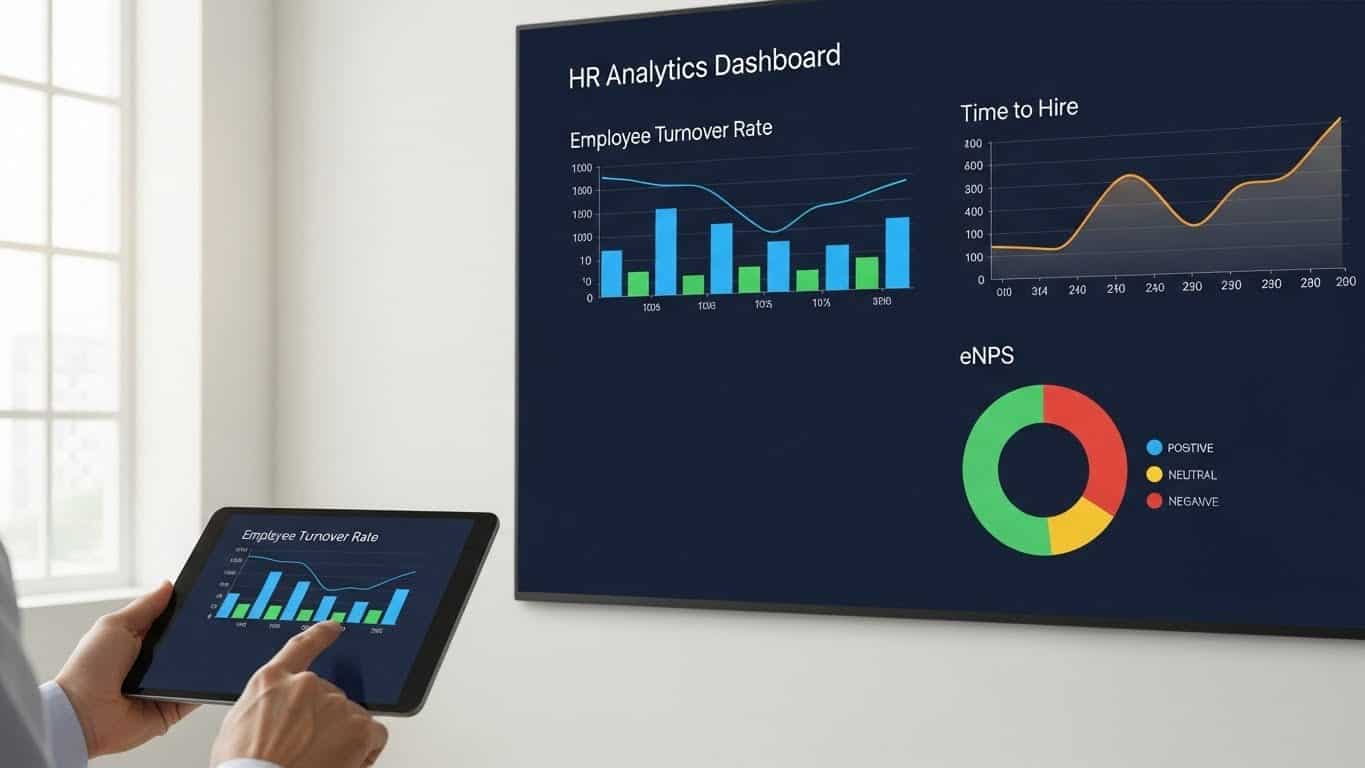
Worksy automatically transforms your raw data into easy-to-understand charts and graphs. You can log in and see your most important KPIs, like real-time headcount, turnover trends, and leave balances, without having to pull a single report.
Drill-Down Capabilities
This is where true analysis happens. See a spike in turnover? With Worksy, you can instantly filter the data to find the root cause. View the turnover rate by department, manager, tenure, or location to pinpoint exactly where the problem lies.
Automated Reporting
Need to prepare for a management meeting? Generate presentation-ready reports on key HR metrics in minutes, not hours. This frees up your time to focus on what the data means and what actions to take.
Conclusion: Make Smarter People-Decisions, Faster
HR analytics is the key that unlocks the next level of strategic human resource management. It empowers you to move beyond an administrative role and become a true strategic partner who drives business growth and success.
With the right tools, any Malaysian business can harness the power of its people data. You no longer have to rely on gut feel.
Stop guessing and start knowing. Explore Worksy’s HR Analytics and discover how you can make data-driven decisions that move your business forward.
Frequently Asked Questions (FAQ)
Where do I start if I’m new to HR analytics?
Start simple. Choose one key area you want to improve, such as employee turnover. Begin by tracking that single KPI consistently. As you get comfortable, you can gradually expand to other metrics.
How often should I review my HR KPIs?
Operational metrics like absenteeism can be reviewed weekly or monthly. Strategic KPIs like employee turnover and quality of hire should be analyzed on a quarterly and annual basis to identify meaningful trends.
Is HR analytics only for large companies?
Not at all. With modern cloud-based HRMS platforms, HR analytics is now accessible and affordable for businesses of all sizes. In fact, small and medium-sized enterprises can be more agile in responding to data-driven insights.
Can HR analytics predict which employees are likely to leave?
Yes, this is known as predictive analytics. By analyzing historical data on employees who have left (looking at factors like tenure, performance ratings, and absenteeism), advanced systems can identify patterns and flag current employees who may be a flight risk.