
Sick Leave vs. Annual Leave: A Guide to Your Rights in Malaysia (2025)
Have you ever woken up feeling unwell and wondered, “Should I take sick leave and go through the trouble of getting an MC, or just use one of my annual leave days?” It’s a common point of confusion for many employees in Malaysia. While both leave types give you a paid day off, they serve very different purposes and are governed by different rules.
Understanding the key differences between sick leave and annual leave is essential. For employees, it means protecting your well-deserved holidays and knowing your rights when you are genuinely ill. For employers, it is crucial for maintaining a fair workplace and ensuring full compliance with the latest Malaysian labour laws.
This guide will clearly break down everything you need to know, from legal entitlements to common workplace scenarios. Moreover, we will show you how a proper system can make managing these leave types straightforward for everyone involved.
What is Annual Leave? The Break You’ve Earned
Annual leave is a paid holiday entitlement that employees earn over a period of service. Its primary purpose is to provide you with a break from work for rest, relaxation, and personal matters. Think of it as your time to recharge, go on vacation, or handle personal appointments without losing any income.
Crucially, annual leave is almost always pre-planned. You apply for it in advance, and it requires approval from your manager to ensure your absence does not disrupt team workflow.
What is Sick Leave? Your Right to Recover
Sick leave, also known as medical leave, is a paid entitlement specifically for when you are medically unfit to perform your duties. Its purpose is to give you the necessary time to recover from an illness or injury without worrying about a loss of pay.
Unlike annual leave, sick leave is unplanned. It is a right you exercise when health issues arise unexpectedly. To validate your absence, employers are entitled to require a Medical Certificate (MC) from a registered doctor or medical practitioner.
Sick Leave vs. Annual Leave: The Key Differences at a Glance
To make the comparison clear, here is a simple table highlighting the fundamental differences between the two leave types.
| Feature | Sick Leave | Annual Leave |
|---|---|---|
| Purpose | For medical recovery from illness or injury. | For rest, vacation, or personal matters. |
| Approval | Unplanned; requires a valid MC for validation. | Pre-planned; requires prior approval. |
| Payment Status | Paid, up to your legal entitlement. | Paid, up to your legal entitlement. |
| Entitlement Source | Employment Act 1955 (Section 60F). | Employment Act 1955 (Section 60E). |
| Can it be Carried Over? | No, unused sick leave is forfeited annually. | Yes, depending on company policy. |
| Encashment Option? | No, cannot be converted to cash. | Yes, upon resignation or if policy allows. |
Your Legal Entitleaments Under the Employment Act 1955
Both leave types are protected by law in Malaysia. Your leave entitlement is not just a company perk; it is a legal right.
Minimum Annual Leave Entitlement
Under Section 60E of the Employment Act, your minimum paid annual leave entitlement is based on your years of service:
- Less than 2 years: 8 days per year.
- 2 to 5 years: 12 days per year.
- 5 years or more: 16 days per year.
Minimum Sick Leave Entitlement
Under Section 60F, your minimum paid sick leave entitlement is also tied to your service duration:
- Less than 2 years: 14 days per year.
- 2 to 5 years: 18 days per year.
- 5 years or more: 22 days per year.
Importantly, this is separate from the 60 days of paid hospitalisation leave you are entitled to annually, provided you are certified as needing to be hospitalised.
Common Questions & Scenarios Explained
Let’s address some of the most frequently asked questions about sick and annual leave in the workplace.
Do I Always Need an MC for Sick Leave?
Yes, if your employer requests it. An employer has the right to require a medical certificate for any day you are on sick leave. If you fail to produce an MC without a reasonable excuse, the company can treat your absence as unpaid leave or even as a disciplinary issue.
What if I Run Out of Sick Leave?
If you have exhausted your paid sick leave for the year, you have a few options. You can, with your employer’s agreement, use your annual leave. Alternatively, you can apply for unpaid leave. If your illness requires hospitalisation, you can then utilise your separate 60-day hospitalisation leave entitlement.
Can My Employer Force Me to Use Annual Leave When I’m Sick?
No. If you provide a valid MC, your employer cannot force you to use your annual leave to cover your sick day. Sick leave and annual leave are separate entitlements. Any arrangement to use annual leave for sickness must be mutually agreed upon by both you and your employer.
What Happens to Unused Leave When I Resign?
This is a critical difference. By law, your employer must pay you for any unused annual leave when you leave the company. However, unused sick leave is always forfeited. It has no cash value and cannot be encashed upon resignation.
Streamline Leave Management with Worksy HRMS
For HR managers and business owners, manually tracking these different leave types can lead to errors and compliance risks. This is where a modern HRMS like Worksy makes a significant difference.
One System, Zero Confusion
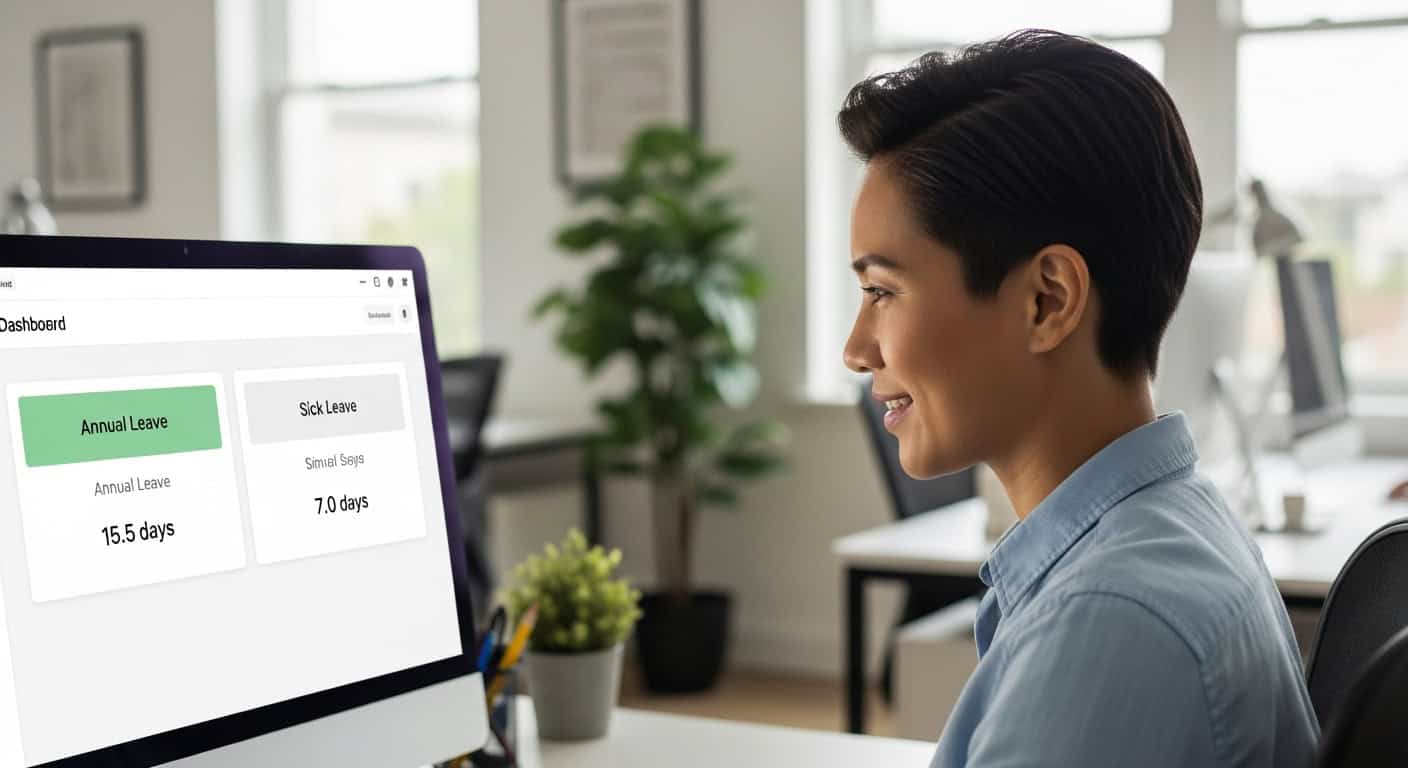
Worksy provides a clear, automated system where employees and managers can see separate, real-time balances for annual leave, sick leave, and hospitalisation leave. This transparency eliminates any confusion.
Automated Policy Enforcement
The system automatically calculates each employee’s legal entitlement based on their service length. It ensures that all leave applications follow the correct approval workflows, whether it’s a pre-planned vacation or an emergency sick day. This is one of the key benefits of a leave management system.
Easy MC Uploads and Tracking
Worksy allows employees to apply for sick leave and upload a photo of their MC directly through a mobile app. This feature streamlines the validation process for HR, creating a secure digital record and removing the need for physical paperwork.
Conclusion: Know Your Leave, Protect Your Rights
Ultimately, sick leave and annual leave are distinct entitlements designed for different needs. Sick leave is your right to recover your health, while annual leave is your right to rest and recharge. Knowing the rules for their purpose, approval process, and what happens at the end of the year is key.
For employees, being informed empowers you to protect your benefits. For employers, having a clear policy and an efficient management system is the best way to ensure fairness and legal compliance.
Eliminate the headaches of leave management for good. See how Worksy can help you automate your leave policies and empower your team with a simple, transparent system.
Frequently Asked Questions (FAQ)
What is the difference between paid sick leave and unpaid sick leave?
Paid sick leave is your legal entitlement under the Employment Act. Unpaid sick leave may be granted by an employer if you have exhausted your paid entitlement but are still medically unfit to work.
Can my employer contact the doctor to verify my MC?
Yes, an employer has the right to contact the issuing clinic or hospital to verify the authenticity of a medical certificate if they have reasonable suspicion.
What if I fall sick while on annual leave?
If you fall sick during your annual leave and obtain an MC for those days, you can request that your employer convert those annual leave days into sick leave days. This would “refund” your annual leave balance, but this is often subject to company policy.
Is hospitalisation leave separate from my normal sick leave entitlement?
Yes. The 60 days of paid leave for hospitalisation is a separate entitlement provided under the Employment Act and does not deduct from your regular sick leave balance.